Monday, December 10, 2012

Environmental Politics: Silkwood (1983)


Since the 1890's, environmental preservation has been a prominent issue in American politics. This commitments to preserve the environment led presidents like Theodore Roosevelt to pass programs to protect forests and create wildlife refuges. In more recent times, bureaucratic agencies began to protect the environment with the creation of the Environmental Protection Agency in the 1970’s. To follow, legislation like the Clean Air Act of 1970 and the Water Pollution Control Act of 1972 were passed.
Individuals and the government have both become more environmentally aware with the creation of various agencies and the passing of numerous laws.Today, environmental protectionism remains a significant issue. 


(With advancements in education and technology it is clear that humans have become more concerned with the environment and preserving the planet. Days like Earth Day advocate environment awareness and educate individuals on how to change personal habits to lessen the strains we put on our planet.)

In the film, Silkwood, Karen Silkwood, a nuclear plant worker begins to design plutonium fuel rods for reactors. She is threatened by exposure of radiation. She is a union activist concerned with working conditions of union members. Once it is clear that the health of the union workers is at risk, plant officials begin to blame Karen, she then begins to gather evidence against them. The film directly shows that what harms the environment also harms humans. 


In the article, “The American Environmental Movement,” Kuzmiak (1991) examines the American grassroots environmental movement and the support it received from society. The author examines how the movement advocated the preservation of natural resources and in modern times, influenced individuals to change their habits and become more environmentally aware. Most importantly, the author describes various agencies and pieces of legislature that shaped modern day U.S. politics to become more environmentally concerned. Like Karen Silkwood, the process for uncovering truths about the environment was slow and strenuous but once exposed the results can change history. 


In “The Two Faces of Toxic Waste: Trends in the Spread of Environmental Hazards,” by Eric J. Krieg (1998), the author investigates the worsening of the toxic waste crisis in Massachusetts. Additionally, the author analyzes the disproportionate distribution of toxic waste in predominately black inner cities and overwhelmingly white suburbs. This environmental discrimination is similar to that of Silkwood, workers are viewed as capital instead of human beings with health risks. The plant even attempts to hide the fact that the radiation exposure is occurring, Karen Silkwood is a strong environmental activist aiming to achieve justice.  

The greatest issue I see with environmentalism is that as long as cost cutting and profit maximizing methods are being implemented the two truly cannot coincide. Environmentalism is an investment similar to education that will always be expensive but will enhance are quality of life and the quality of our children's lives. Industries create garbage and garbage must be disposed of properly, much like any other type of waste. The value of the health of our planet should surpass profits. 


Sunday, December 9, 2012

Race and Politics: Guess Who’s Coming to Dinner? (1967)


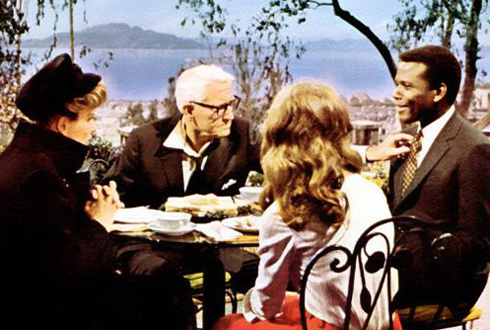
The 1967 film, Guess Who's Coming to Dinner?, confronts ideas of miscegenation in a divided United States. Joanna falls in love with Dr. Prentice in Hawaii and brings her black lover home to her parents who up until then seemed like liberal civil rights activists. At the time, interracial marriages were still illegal in some states. But were Joanna's parents racists or did they just have a problem with a black man marrying their daughter? 

Racism is an interesting concept because it can take several forms. Some people think it's racist to draw differences between groups, others are bother by derogatory words or phrases, and some people aren't racist until their daughter is dating someone of a different race. In the film, Dr. Prentice is a charming, educated, and reasonable man. He might have very well been considered perfect by Joanna's parents had he been white. That's where racial differences become interesting, when people are willing to sacrifice substance to please visual preferences. Perhaps, Joanna's parents were simply worried about the future of John Prentice and Joanna because they would be discriminated against or perhaps it truly bothered them that their daughter was in love with someone who wasn't white. 


In the article, "'My Daughter Married a Negro:' Interracial Relationships in the United States as Portrayed in Popular Media, 1950-1975," by Melissa Magnuson-Cannady (2005), analyzes the history of interracial marriages. As a member of an interracial marriage, she discusses how the various laws implemented against the practice prevented individuals who were in love from getting married. It is identical to the activism set forth by the gay rights movement today. Also, in the article "Guess Who's Been Coming to Dinner? Trends in Interracial Marriage over the 20th Century," by Roland G. Fryer Jr. levels of racism are outlined. He illustrates how many people embrace people of other races in work, school, even quasi-social environments but begin to feel uncomfortable when intimacy is introduced. He claims that intimacy is the most accurate indicator or racial tolerance. 

Though I believe intimacy illustrates complete acceptance of race, I don't think it can be the sole indicator because of previous conventions set forth. If an individual was raised to only be around one particular race he or she might not be attracted to people of other races. Racism remains a flaw in human history and it sets society back by marginalizing relationships and potential. Love shouldn't be regulated by moronic ideologies like racism but love can't be the measure for whether or not different peoples are equal in society. 


(Here Joanna's father finally expresses his acceptance of her relationship with Dr. Prentice. After he realized how much the couple loved one another he reanalyzed the situation and understood that as long as their love was true that they could be happy together. He however does express his fear of how society will react to their marriage.)


Gender and Women’s Rights: Adam’s Rib (1949)


Adam's Rib, is a film completely centered on gender roles. Adam and Amanda are a married couple involved in the same field, law. When Doris Attinger is convicted of shooting her husband after he repeatedly cheats on her Amanda becomes obsessed with her case. She wishes to secure equal treatment for men and women in the courtroom, some of the witnesses even laughed Amanda's goal off as impractical when asked whether or not they viewed men and women as equals. Amanda wishes to equalize the roles between men and women but she herself does not. Doris shot her husband, regardless of the reason, it was an irresponsible, impulsive, and selfish act, I would state the same in the event of a man committing the act. 

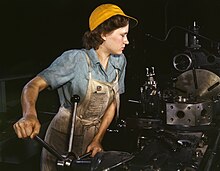
In the article, "Rosie the Riveter: Myths and Realities" Quick (1975) analyzes the  history of the female labor movement during WWII that kept wartime production possible. However, Quick does not view women as liberated, instead the movement is still progressing. Before individuals can decide what definitive liberation is, the limits must be clear. Are certain gender roles natural or are they conventions set forth by society? Are women generally better at certain responsibilities? Can a man raise a child the same way a woman can? It's not that female liberation is unwanted, liberation just needs to be defined because at times the end results seem impossible. If gender roles have become second nature, I don't see a quick transition to where men will be rocking a cradle while women are on the couch watching Kungfu movies drinking a Budweiser. 


In the article, "What's Love Got to Do with It? Equality, Equity, Commitment and Women's Marital Quality," by Wilcox and Nock (2006), the authors illustrate WASP marriages and claim that they create happy marriages. In WASP marriages, the relationship emphasizes on the wife's career path and spouses are expected to make sacrifices to make the marriage work. Though I have faith in the statistics put forth, the argument simply swaps the victims of gender roles. It seems as if once again, gender liberalization and what gender equality would look like actually is left out. 

Like in the film, Adam's Rib, sometimes too much ambition on either side of a relationship can lead to the degradation of it. Amanda is clearly much more ambitious than Adam, she has something to prove and it causes her to be impulsive and irrational. I must admit that I think gender roles in their most simplistic forms within the four walls of a room are necessary and harmless. If two individuals are levelheaded they'll always cooperate and a relationship should be team based not a partnership of two individuals of two different calibers or qualities. 


Gay Rights: Milk (2008)

The 2008 film, Milk, depicts the life and political career of Harvey Milk, the first openly gay individual to be elected public office in California. Harvey Milk moves to San Fransisco and opens up a photography shop. The film portrays both Harvey’s will to represent the community and the personal discrimination he is faced with as a result of his sexual orientation. Instead of being exclusively single issue based, Harvey Milk aims to serve all the constituents of society regardless on their backgrounds, specifically sexual orientation. The overall questions to consider is how does an issue like gay rights affect society and how does society affect the advocators of gay rights?
In the article, ” The Polls-Trends in the United States” (2009) by Chelsea Schaefer and Greg Shaw, the authors present survey data that confirms tolerance increases towards traditionally unpopular groups. But is tolerance acceptance? And how can “tolerance” be just as offensive to minority groups? Until recently, blacks were openly  discriminated against and gays remain the “black sheep” of society. Women are underprivileged in far parts of the world and virtually every country on the globe has a minority group that is in some way underrepresented or discriminated against. Intolerance may just be a human gene, highly unfortunate but possible. Schaefer and Shaw claim that growing tolerance exists but it may be that the groups discriminated against are changing. Though a growing tolerance towards gays exists, are they really accepted? More importantly, do they feel accepted?

)Harvey Milk began his political activism in San Fransisco, decades later groups like Facebook even took part in gay pride events in the city. It shows how times have changed)

The article, “Minority Group Interests and Political Representation: Gay Elected Officials in the Policy Process” by Haider-Markel, Mark Joslyn, and Chad Kniss, explains that minority groups like gays, can be represented by sympathetic officials who benefit particular groups in the policy process. The authors claim that gays, for example, can be represented by non-gay officials who identify with them. However, are they representing them to the fullest extent? In the film,Milk,Harvey Milk attempts to represent the gay community and is directly part of it. The question to ponder is whether or not officials that aren’t directly affiliated with a particular minority group can accurately represent them?